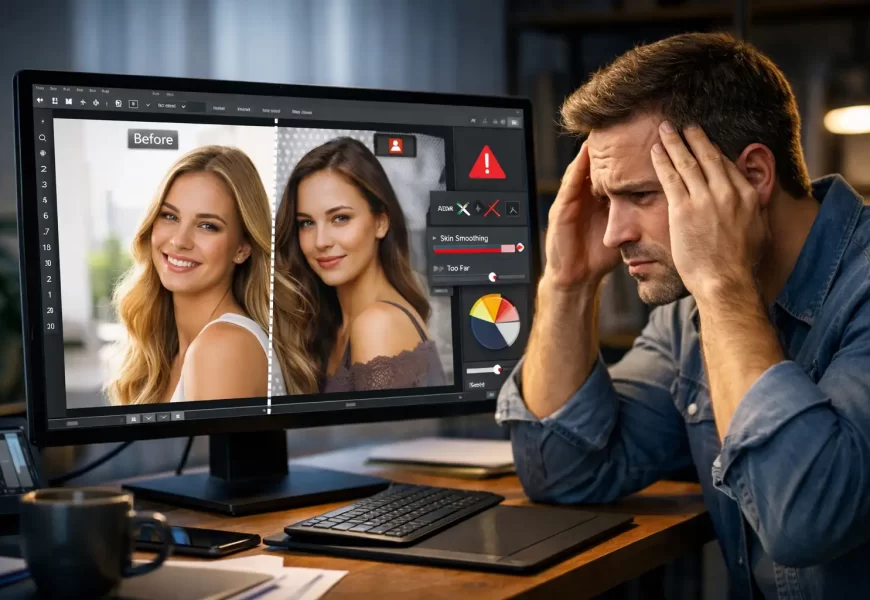
Using image editing tools and assistants powered by artificial intelligence, as well as similar hardware tools, has been on the rise in many businesses and industries. From the instantaneous removal of backgrounds to the ability to enhance photos automatically, these tools offer users an efficient and cost-effective solution and can generate results in a matter of minutes or seconds. Many of these features may seem great for casual users, however, professionals and businesses are experiencing a growing dissatisfaction with these tools.
The source of this dissatisfaction does not stem from technology being unwarranted or incapable, but rather that it is rated too highly by users for what it can deliver for them. Users who are using image editing assistants thinking they are going to get the same results as with other methods of production will quickly begin to realise there are limits to these image editing tools. Therefore, many professional users still use specialized clipping path companies to produce professional results.
In this article, we delve into the true reasons behind the dissatisfaction that users are experiencing with the use of image editing assistants as outlined above, based on our extensive experience, expert industry knowledge and realistic expectations of the capabilities of these image-editing tools.
Unrealistic Expectations Created by Automation Marketing
One of the primary reasons for dissatisfaction is the way image editing assistants are marketed. Many tools claim to deliver professional-quality results instantly, with minimal effort and without any design expertise.
In reality, image editing is not a one-size-fits-all process. Lighting conditions, complexity of the object, background texture, and intended use all influence how an image should be edited. When users expect automation to replace judgment, creativity, and experience, disappointment becomes inevitable.
Professional editors understand that even basic tasks like removing backgrounds require careful judgment. That’s why clipping path services, which are performed manually by trained professionals, continue to set high standards for accuracy and reliability.
Accuracy Issues in Complex Image Editing
Although there are many image editing assistants that perform well with simple images, they do not perform well on more complex images. For users that work with images on a professional basis, this is a frequent cause of frustration.
Why Complex Images Expose AI Limitations
Images contain hair, fur, transparent objects, overlapping subjects, or reflective surfaces. Automated tools may misinterpret the contents of these images and remove essential details, distort edges, or even create visible artifacts that affect overall quality.
A poorly edited product image could reduce a business’s credibility, reduce conversions, or decrease consumer trust. Conversely, clipping path services guarantee that the image is carefully clipped to produce clean edges and accurately isolate objects even under the most difficult circumstances.
Inconsistent Results Across Image Batches
A business’s professional image must be presented consistently. This is especially important in e-commerce and branding (e.g., packaging). The problem arises when image editing assistants produce inconsistent edits for multiple images at once.
Impact of Inconsistency on Businesses
Two images taken using similar settings could have different edits done to them with the same AI tool. Inconsistencies created by differences in brightness, colour balance, and edge quality disrupt visual uniformity on websites and product catalogues.
Quality benchmarks for clipping path services are determined by human-led teams. As such, all images in a batch will receive similar edits based on the team’s workflow, thereby maintaining a uniform appearance and reinforcing brand identity and professionalism.
Limited Customization and Lack of Control
Users are often unhappy with image editing programs because they have little opportunity to customize their image editing experience; most of these applications use pre-defined rules as part of a limited range of control that does not permit individualized choices.
Why Creative Control Still Matters
When working for an organization or company, creative professionals commonly require:
- To connect visual assets to established company branding
- To prepare visual assets for various social media platforms
- To change small details of an image according to the creative objective
For a professional editor to provide great service when using the clipping path service, the editor must be able to interpret personal and creative descriptions and adjust images accordingly. Unlike automated programs, professional editors offering clipping path services are there to provide directors with exact and detailed instructions, and to alter and change photos based on directorial instructions, not by following automated guidelines.
Poor Understanding of Context and Purpose
AI tools analyze images based on patterns, not purpose. This lack of contextual understanding is a frequent cause of user dissatisfaction.
How Contextual Errors Occur
An image modification assistant could delete shadows that create dimension; proportions could modify the perspective and accuracy of the image; and cropping could leave out parts of the photograph that are necessary for branding purposes. While the actions taken by an algorithm may make sense in terms of computer programming, they will not produce a visually appealing image for clients when applying the image in the real world.
Humans have a better understanding of the reason for using and creating an image in a given environment, i.e., online sales, advertising, and/or print materials, than do computers. This contextual knowledge is what gives professional clipping path services their competitive edge.
Quality Issues That Appear After Publishing
Many users trust AI-edited images without closely reviewing them. Unfortunately, subtle errors often become visible only after images are published.
Common problems include:
- Jagged edges visible on zoom
- Halo effects around objects
- Incomplete or uneven background removal
Such errors can negatively affect customer perception. Professional clipping path services include manual review and quality checks, reducing the likelihood of publishing flawed visuals.
Over-Automation and the Loss of Accountability
Image editing assistants prioritize speed, but speed often comes at the cost of accountability. When a tool produces poor results, users have limited options for correction.
Why Accountability Builds Trust
Support for issues with automated tools is not provided by a trained professional; therefore, users have limited options for support through general articles and auto-generated messages.
Conversely, Professional Clipping Path Services offer users direct access to communicate directly regarding any issues related to their service or the quality of the final output (i.e., artwork). Because of the ability to interact directly with a Professional, there is a greater sense of trust associated with Professional Clipping Path Services as they assume responsibility for the quality and accuracy of the work and offer a revision process.
Data Privacy and Security Concerns
As awareness of data privacy grows, users are becoming more cautious about uploading images to AI platforms. Many image editing assistants lack transparency regarding data storage and usage.
Why Security Matters to Professionals
Confidential product photos, unpublished concepts and customer property are just some examples of the sensitive materials that many businesses work with. Inadequate policy guidelines regarding how data is handled by a business can create risk for everyone involved.
In most cases, reputable clipping path services offer secure file processing, private file servers and confidentiality agreements with their clients. This guarantees the security and protection of all files, especially when working with companies that operate within highly competitive environments.
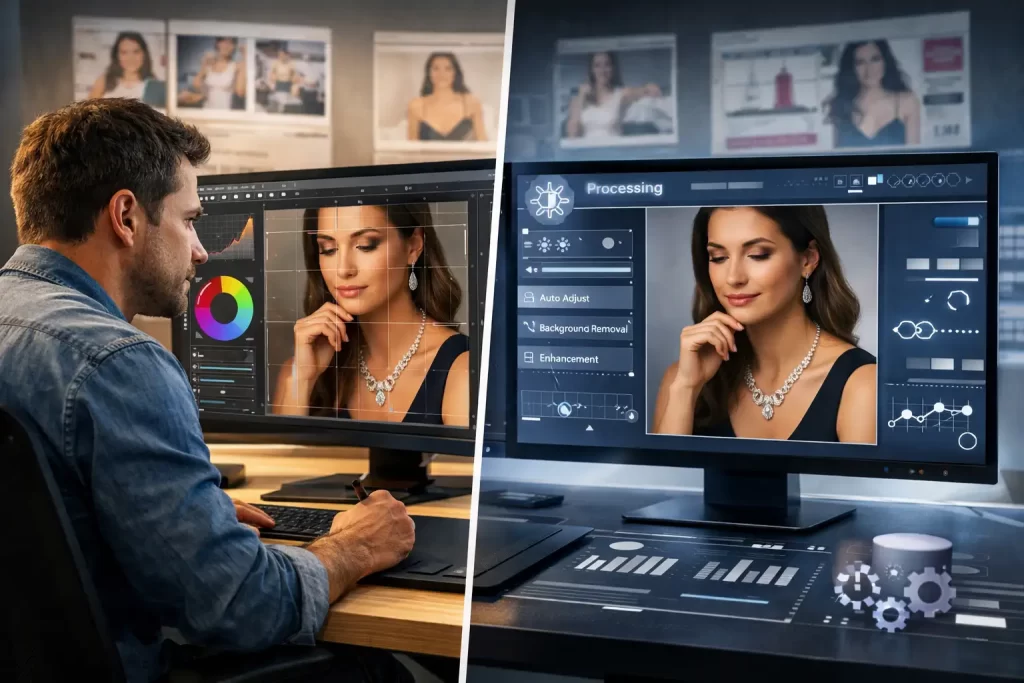
The Role of Experience in Image Editing
In addition to being technical, image editing is an overwhelming experience. Experienced editors know about visual balance, customer psychology, and platform requirements.
While very efficient, AI tools do not offer the same level of experience as a human editor and cannot anticipate how an audience will react to the editing choices made by the AI tool or how the edited image relates to the overall marketing strategy.
Therefore, there tends to be a disconnect when users of AI tools expect an automated system to provide the same level of satisfaction as a professional image editor who has spent years perfecting their craft through experience.
When Image Editing Assistants Work Best
Image editing assistants are not necessarily poor in quality. They can be of great use when used effectively.
They provide useful assistance for:
- Basic personal image edits.
- Simple images with sharp edges.
- Initial drafts before finalizing manually.
When users choose to fully automate their entire workflow through AI, they encounter problems. Proper understanding of how AI will assist with each task will eliminate some of the frustration and improve overall results.
Why Many Users Return to Clipping Path Services
Despite advancements in AI, many businesses continue to outsource image editing to professional providers. The reason is simple: reliability.
Clipping path services offer:
- Precision and consistency
- Human judgment and creativity
- Accountability and support
These qualities directly address the pain points users experience with image editing assistants.
Conclusion: Why Dissatisfaction Continues to Exist
Unfulfilled expectations of an image editing assistant coupled with technical limitations and lack of human judgement have created a barrier to user satisfaction with these tools. While image editing assistant tools have speed and ease of use as strong features for the user, there are limitations in providing the necessary level of accuracy, consistency, and context that Zoom Winning Images needs for a professional image editing process to be a high quality outcome.
Clipping Path Services are a trusted method for high-quality visual content for businesses and individuals that have come to rely on them. It is a method that incorporates expertise and many years of experience and also provides an intense amount of attention to detail that cannot be matched by automation.
The use of Image Editing will likely involve a combination of both human and AI editing processes. Until that future arrives, the general level of unfulfilled expectations concerning image editing will remain.